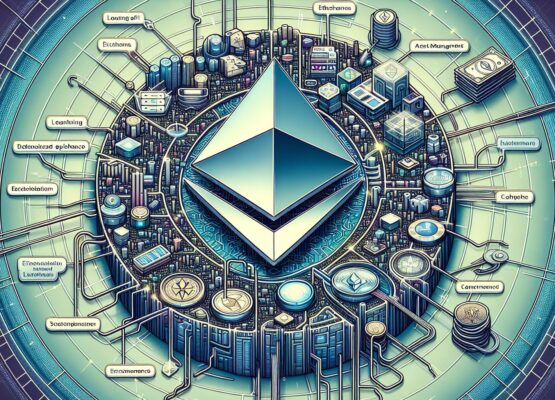
Every now and then, a new technology comes along to disrupt established paradigms and revolutionize how we think about finance. Blockchain’s latest spawn, Uniswap, might just be one such technology. Its elegantly simple protocol for automated liquidity provision on Ethereum is turning heads in the world of decentralized finance (DeFi).
Uniswap’s Vision: A More Open Financial System
Founded by Hayden Adams in 2018, Uniswap was born out of a vision to create a more open and accessible global financial system. By utilizing smart contracts, Uniswap enables its users to trade any Ethereum-based token directly, without the need for intermediaries, such as brokers or banks.
Its DeFi ecosystem is trailblazing in overturning traditional structures of financial power and distribution. As a decentralized protocol, Uniswap secures transparency and fairness by allowing anyone, anywhere in the world, to create new markets, provide liquidity, and build financial applications.
Uniswap’s Core: The Automated Market Maker
Defining Uniswap’s DeFi platform is the Automated Market Maker (AMM). The AMM smart contracts create liquidity pools that allow for efficient, on-chain trading. Unlike traditional order book models, it allows tokens to be traded directly from the pool, overcoming problems associated with illiquid markets.
The practical result of Uniswap’s AMM protocol? Individuals can trade tokens, or even become market makers, by contributing to a liquidity pool and earning a share of the trading fees. It’s fair, permissionless, and efficient.
The UNI Token: Governance in the Uniswap Ecosystem
To further the principle of decentralization, Uniswap introduced its own token, UNI. Issued to its community, it provides holders with a stake in the protocol’s governance. This includes decisions about its usage, development and even the distribution of a community treasury. Essentially, this means that Uniswap is governed by those who use it, emphasizing its bottom-up approach to finance.
Challenges and the Road Ahead
Like any other technology, Uniswap’s DeFi ecosystem is not without its challenges. Critics point out security concerns and the risk of smart contract bugs. Others worry about the sustainability of high transaction fees and the potential effects of market volatility.
However, despite these challenges, Uniswap remains a leading innovator in the DeFi space. They continue to grow and evolve, launching Uniswap V3 in May of 2021, promising greater capital efficiency and flexibility for liquidity providers.
Conclusion: Uniswap Pioneering DeFi Success
Uniswap’s revolutionary approach to DeFi serves as an excellent case study for the impact of blockchain technology on the finance sector. By reinforcing the strengths of decentralization and replacing traditional intermediaries with smart contracts, Uniswap is shaking the financial landscape to its core.
The road ahead may be paved with challenges, but one thing is clear: as long as there is a drive for more open, accessible, and fair financial systems, platforms like Uniswap will continue to pioneer, innovate and inspire us all.
Financial notice (as of 16.10.2026): this article is general information, not financial, investment, tax, or legal advice. Crypto-assets are high risk: you can lose some or all of your money. Rules and products change; always check the official source and, if needed, ask an independent adviser.
Investment risk (as of 16.10.2026): past performance does not predict future results. No return is promised or guaranteed. Do not invest money you cannot afford to lose, and do not invest borrowed money.