Introduction
Decentralized Finance, or DeFi for short, is rapidly revolutionizing the traditional financial system, promising a more inclusive, transparent, and efficient world of finance. At the forefront of this financial transformation lies the Ethereum DeFi ecosystem. This not only has the most applications, but also the highest value locked in DeFi, making it a suitable focus for this blog post. In this piece, we aim to demystify the complexity and intricacies of the Ethereum DeFi ecosystem.
Body
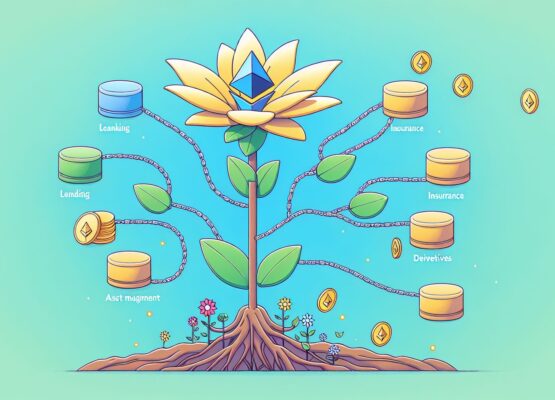
Traditionally, all financial activities are regulated and managed by centralized institutions such as banks and government agencies. However, with the advent of Blockchain technology, the Ethereum DeFi ecosystem aims to decentralize this control. It leverages the Ethereum blockchain’s smart contract functionality to create decentralized applications (dApps). These dApps replicate traditional financial services, including lending, borrowing, and trading, but without the need for intermediaries.
When it comes to lending and borrowing, platforms like Aave and Compound have become prominent players in the Ethereum DeFi ecosystem. These platforms enable users to earn interest on their cryptocurrency holdings by lending them out in a transparent, peer-to-peer manner. Additionally, they allow users to borrow cryptocurrencies against a collateral.
Another noteworthy application of the Ethereum DeFi ecosystem is decentralized exchanges (DEXs) such as Uniswap. Unlike traditional exchanges, DEXs enable peer-to-peer trading directly from one’s wallet, eliminating the need for a trusted third party to oversee transactions.
Another area where the Ethereum DeFi ecosystem excels is the realm of stablecoins. Stablecoins are digital currencies that are pegged to a stable asset, such as fiat money. Examples like DAI reside on the Ethereum blockchain, providing price stability in an otherwise volatile crypto market.
Decentralized insurance platforms like Nexus Mutual and yInsure have also emerged within the Ethereum DeFi ecosystem. They offer coverage for smart contracts and wallet insurance, adding a much-needed layer of security to DeFi users.
A newer concept in the Ethereum DeFi ecosystem is Yield Farming. Platforms like Yearn.finance allow users to optimize their yield across various DeFi protocols, boosting their income in a unique and efficient manner.
Conclusion
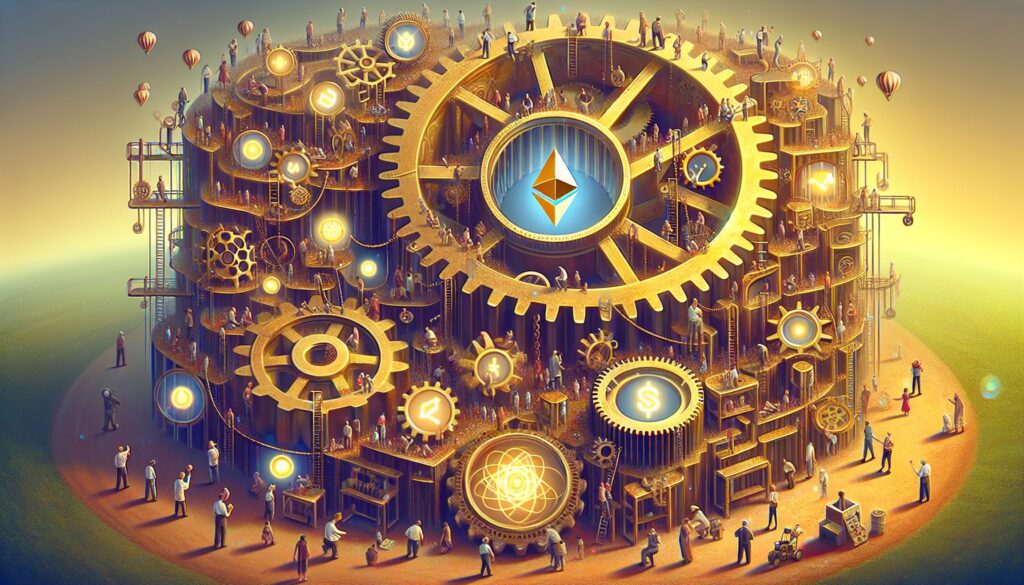
In conclusion, the Ethereum DeFi ecosystem is a complex network of decentralized financial applications working in tandem to redefine how we perceive and interact with finance. By eliminating intermediaries, DeFi applications on Ethereum are creating a more competent and equitable financial world. While the ecosystem is not without its challenges – smart contract risks, price volatility, and regulatory uncertainties, to name a few – the progress made thus far is truly groundbreaking.
As we continue to witness the exponential growth of the Ethereum DeFi ecosystem, we need to stay informed and keep up with its evolution. The DeFi revolution has only just begun, and Ethereum is leading the charge. Understanding its applications and functionalities is a step forward in realizing the full potential of decentralized finance. As we embrace this new frontier, the Ethereum DeFi ecosystem stands as a beacon of innovation, illuminating the path to a truly decentralized financial future.
Financial notice (as of 16.10.2026): this article is general information, not financial, investment, tax, or legal advice. Crypto-assets are high risk: you can lose some or all of your money. Rules and products change; always check the official source and, if needed, ask an independent adviser.
Investment risk (as of 16.10.2026): past performance does not predict future results. No return is promised or guaranteed. Do not invest money you cannot afford to lose, and do not invest borrowed money.