Introduction
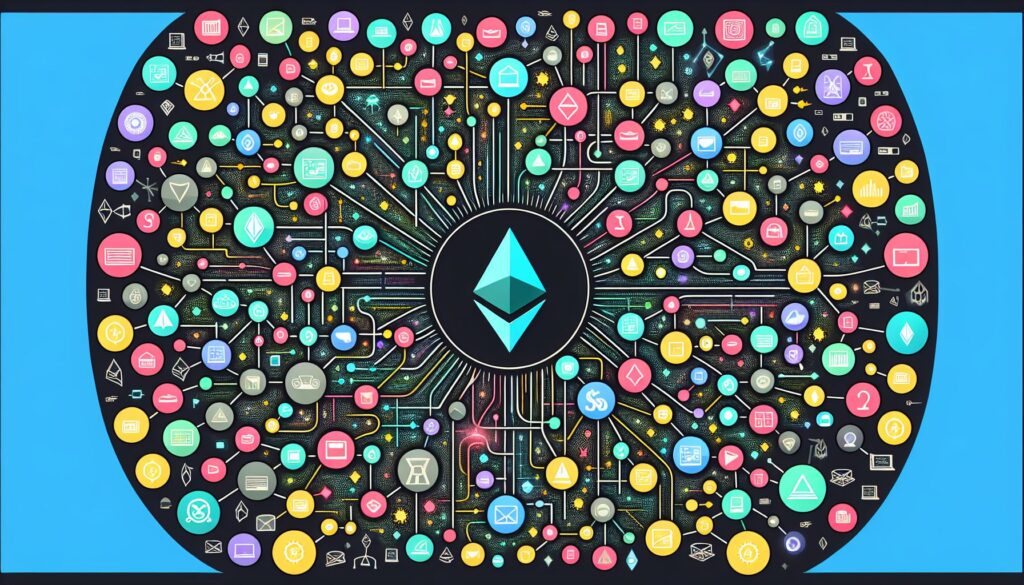
Decentralized finance, also known as DeFi, has hit the ground running in the finance industry with groundbreaking alterations in how we perceive and use financial services. A key player in the revolution, Ethereum, presents a robust and flexible DeFi ecosystem that has taken the world by a storm.
Body
Ethereum, the second-largest cryptocurrency platform by market capitalization, plays a vital role in the DeFi movement. By providing an open-source blockchain, Ethereum allows developers worldwide to write code and build decentralised applications (dApps).
Enthralling Advantages
Arguably, one of Ethereum’s most lauded advantages is its smart contracts’ functionality. These digital protocols automate transactions and other applications when certain conditions are met. The lion’s share of DeFi projects is based on Ethereum’s smart contracts technology, enabling seamless financial services like borrowing, lending, yield farming, and insurance to be available on a transparent, secure, decentralized network.
Financial inclusivity is another feather in Ethereum’s cap. Its open source nature means that anyone with an internet connection, regardless of geographical restrictions, can access and participate in the DeFi ecosystem. Moreover, the Ethereum community has built an array of dApps catering to diverse financial functionalities. From stablecoins like DAI balancing the price volatility issue, lending platforms such as Aave, Compound providing high interest, DEXs like Uniswap, Kyber revolutionizing trading, to DeFi insurance like NexusMutual, the Ethereum ecosystem is a holistic DeFi solution.
Learning Curve
While Ethereum and DeFi are potent amalgamations with transformative potential, they are not devoid of challenges. The journey is characterized by a steep learning curve where users must understand blockchain technology, crypto wallets, private and public keys, Gas fees, among others. The maturity of Ethereum’s DeFi ecosystem requires user competency and awareness to avoid perils and navigate seamlessly. Scalability and network congestion have also been challenges for Ethereum, causing increased transaction costs during peak usage times.
Conclusion
In conclusion, Ethereum is forging ahead in democratizing finance with its powerful DeFi ecosystem. Its inherent smart contracts functionality, financial inclusivity, transparency, and wide range of applications are revolutionizing the financial industry. However, the improved user experience, education, scalability, and lower transaction fees can leverage Ethereum’s DeFi ecosystem for the broader user base. As Ethereum 2.0 rolls out, we can anticipate more exciting innovations in the DeFi space, bolstering Ethereum’s position as a DeFi leader. The future of finance is decentralized, and Ethereum showcases this to be nothing but the absolute truth.
Financial notice (as of 16.10.2026): this article is general information, not financial, investment, tax, or legal advice. Crypto-assets are high risk: you can lose some or all of your money. Rules and products change; always check the official source and, if needed, ask an independent adviser.
Investment risk (as of 16.10.2026): past performance does not predict future results. No return is promised or guaranteed. Do not invest money you cannot afford to lose, and do not invest borrowed money.