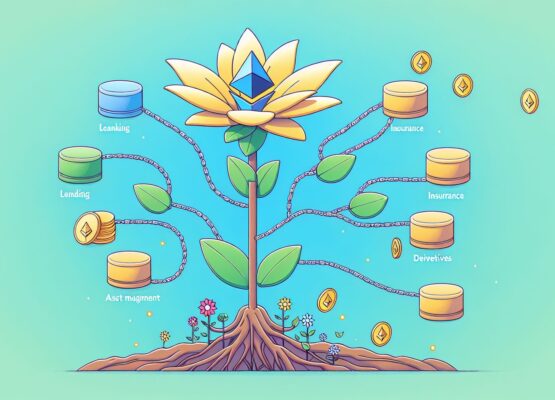
The world of finance is witnessing a steadily growing innovation, the Decentralized Finance ecosystem, also known as DeFi. These come into play as blockchain and cryptocurrency applications that disrupt the traditional financial sector. Today, let’s take a closer look at one of the most pioneering DeFi ecosystems in the industry – Ethereum.
A Dive into Ethereum’s Decentralization
Ethereum is an open-source, blockchain-based platform that enables developers to build and publish smart contracts and distributed applications. Its native cryptocurrency, Ether (ETH), is the driver of the ecosystem, serving as a store of value and a gas to execute smart contracts and transactions within the network.
However, the true potential of the Ethereum ecosystem lies not only in its cryptocurrency but also in its implementation of DeFi. Being the first DeFi ecosystem, Ethereum ushers in a wave of financial decentralization, removing the need for intermediaries such as banks, governments, and other financial institutions in financial transactions.
What Ethereum offers is a high degree of control and transparency to users. It empowers individuals and businesses to transact or trade directly with one another, bypassing traditional gatekeepers of finance. Coupled with advanced encryption standard, it provides security and privacy to users while doing transactions.
Ethereum: The Bedrock of DeFi
Since its inception, Ethereum has been at the forefront of the DeFi revolution. As of now, almost all the top DeFi applications, be it in lending, insurance, asset management or decentralized exchanges, are built on Ethereum.
Some popular examples include MakerDAO, a decentralized credit service that allows users to borrow against the Ether they hold; and Uniswap, a decentralized exchange that allows automated transactions between any two Ethereum-based tokens.
Ethereum also allows the creation and management of decentralized autonomous organizations (DAOs). It essentially replaces traditional organizational structures by enabling people to codify relationships and business rules digitally.
Future Expansion and Challenges
While Ethereum has made substantial strides, it’s not without challenges. Issues of scalability, high gas fees, and congestion during peak periods are a few bottlenecks impeding its growth. However, the Ethereum 2.0 upgrade, also known as Serenity, aims to tackle these challenges by introducing Proof of Stake (PoS) consensus mechanism and shard chains.
The Ethereum community remains extremely active in pursuing technological developments that further cement Ethereum’s position as the leading DeFi platform.
Wrapping Up
Ethereum has been and continues to be an engine of innovation, and its influence on DeFi is growing by the day. Even though it faces challenges, the potential rewards for successfully overcoming them are immense, ultimately pointing towards a promising future for Ethereum.
This audacious experiment of building an open, permissionless and decentralized financial system has made Ethereum not only a market leader but a catalyst for the revolution that DeFi aims to bring. Its vision for a democratized financial system is unleashing a new era of financial inclusion, transparency, and freedom, redefining the global financial landscape.
Financial notice (as of 16.10.2026): this article is general information, not financial, investment, tax, or legal advice. Crypto-assets are high risk: you can lose some or all of your money. Rules and products change; always check the official source and, if needed, ask an independent adviser.
Investment risk (as of 16.10.2026): past performance does not predict future results. No return is promised or guaranteed. Do not invest money you cannot afford to lose, and do not invest borrowed money.