Ethereum, the second largest cryptocurrency by market capitalization, is more than just a digital asset; it’s an entire DeFi (Decentralized Finance) ecosystem. This article aims to unveil the wonders of the Ethereum DeFi ecosystem and its extraordinary potential for changing the shape of global finance.
Ethereum: More than Just a Cryptocurrency
Founded in 2014 by a team led by Russian-Canadian programmer Vitalik Buterin, Ethereum quickly emerged as a key player in the world of cryptocurrencies. But unlike other cryptocurrencies, Ethereum integrated smart contracts into its platform. This, in turn, has made it a breeding ground for a decentralized ecosystem, giving birth to various applications contributing to the world’s DeFi revolution.
The Power of Decentralized Finance
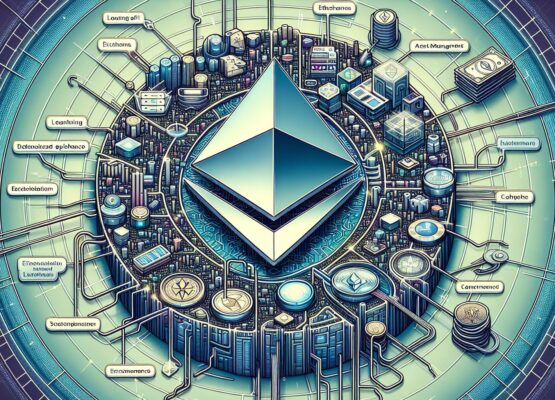
Ethereum’s DeFi space holds the promise of financial inclusion and economic growth. It offers services such as lending and borrowing, decentralized exchanges, derivatives, payments, and asset management. Each of these services helps eliminate the need for intermediaries, leaving total control in the hands of the end-users.
Moreover, Ethereum’s DeFi ecosystem enables the creation of “DApps” or decentralized applications. These DApps, running on the Ethereum blockchain, have the potential to provide services previously exclusive to the realm of centralized financial institutions. This opens a new era of open-source banking and democratizing access to financial services.
Unleashing the Potential of Ethereum’s DeFi Ecosystem
Ethereum’s potential in the DeFi world is truly extraordinary. One of the most popular applications to come out of Ethereum’s DeFi ecosystem is “MakerDAO”, a decentralized lending platform allowing users to borrow stablecoins pegged to the U.S. dollar.
Another notable player in the Ethereum DeFi ecosystem is “Uniswap”, a decentralized exchange that enables users to trade directly with other users, bypassing the need for traditional exchanges and the fees associated with them.
The Future of Ethereum and DeFi
Despite the remarkable progress, Ethereum’s DeFi ecosystem challenges remain, including scalability issues, high gas fees, and security vulnerabilities. However, the upcoming Ethereum 2.0 upgrade promises to address many of these issues and further propel Ethereum’s DeFi ecosystem into the mainstream.
Conclusion
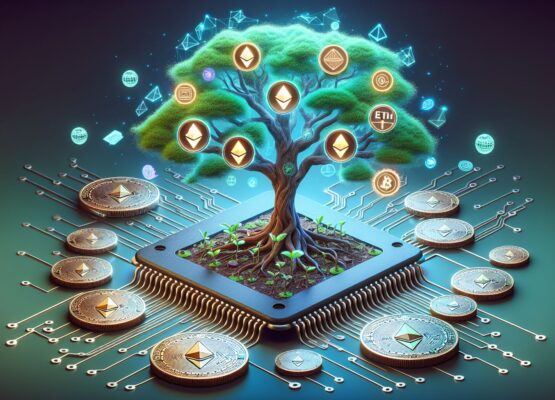
Ethereum has successfully planted its roots as the backbone of the DeFi revolution. It has shown that its smart contract capabilities and DeFi ecosystem not only disrupt traditional financial systems but also provide the basis for a more inclusive, efficient and transparent economy. Ethereum’s growth and evolution in the DeFi space will continue to reshape the landscape of global finance, bringing us one step closer to a decentralized future.
Financial notice (as of 16.10.2026): this article is general information, not financial, investment, tax, or legal advice. Crypto-assets are high risk: you can lose some or all of your money. Rules and products change; always check the official source and, if needed, ask an independent adviser.
Investment risk (as of 16.10.2026): past performance does not predict future results. No return is promised or guaranteed. Do not invest money you cannot afford to lose, and do not invest borrowed money.